The Lataste Foyer consisted of a professional training center, class rooms, dorms, a refectory with mural paintings where everyone would eat together, some family homes, an infirmary, a giant flowered covered porch with orchids and in the center of the property was a giant wooden theatre built on stilts, a place to reunite and to party. The children received there a weekly Buddhism teaching by Mr. Narin. They were also learning traditional Khmer dances.
« Papa Emmanuel » looked out after every child as if he or she was his own family. There were Cambodians by his side with whom he had founded the ADTJK: Mr. Narin, Mr. Chhulnly, Mr Pin, Miss Kimsen, Misses Minsok and many others. Everyone wanted to give to these children (mostly orphans) a new start, an access to school, culture and medical care.

In 1998, Emmanuel decided to move out of Cambodia. The ADTJK decided to continue the project by searching for new partners who would accept to continue the initial project.
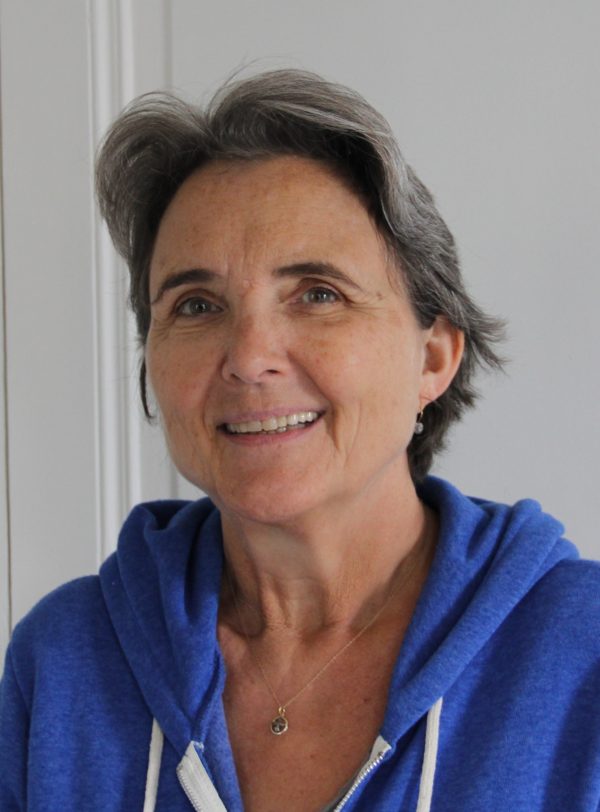
My first time at the Foyer in 1996, which has left an indelible mark on me, is the reason why I took part in this incredible human adventure with Denis, one of Emmanuel’s friends and created the association AEC-Foyer Lataste. The AEC-Foyer Lataste would have never seen the light without this encounter, without the help and the knowledge of our partner ADTJK.
We owe what we are today to our godfathers, godmothers and donors’ engagement. They have been supporting us for the last 20 years. We also owe it to those who have been laying the foundations since 1993. Still today, we are committed to welcoming the most fragile Cambodian children to allow them to have a quality education and to recover hope and dignity.
Still today, we are committed to welcoming the most fragile Cambodian children to allow them to have a quality education and to recover hope and dignity.
On the AEC’s 20th anniversary, my thoughts go out to the ADTJK and Emmanuel.
Patricia LABOURIER, March 2018
THE AEC-Foyer Lataste’s origins: a moving story
_______________________________________
Patricia is the AEC-Foyer Lataste president. She talks about the association’s origins
I discovered the Foyer Lataste in Sisophon on my first trip to Cambodia back in 1996. The Foyer was founded in 1993 by Emmanuel Guary (he is currently vice president of AEC) and the ADTJK members who are our historic partners.
In this Foyer lived isolated kids or orphans, women, mostly widows with no income, Cambodian administrators in charge of school and health education. All of them are from Banthey Meanchey and are innocent victims of the Khmer Rouge genocide.
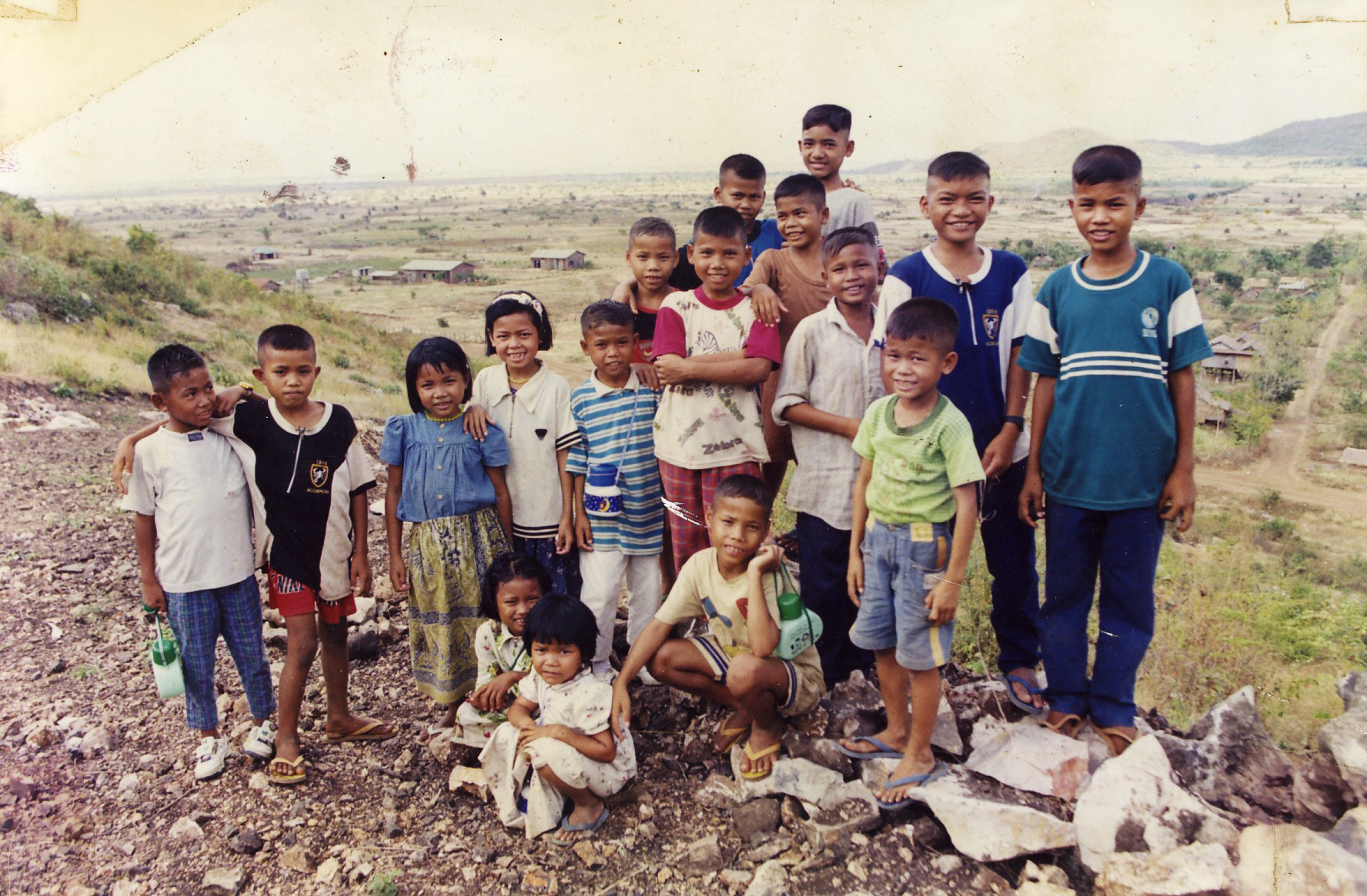
What hit me when arriving at this place was the children’s happy hubbub in this exceptional site right at the bottom of mountains. It was wonderfully well decorated with colorful flowers, especially with Chanthou (a Cambodian flower variety used for flower crowns), fruit trees under where you could rest in the shade, frangipanis, bougainvillea, a few wild chickens, some pigs and even two cows.
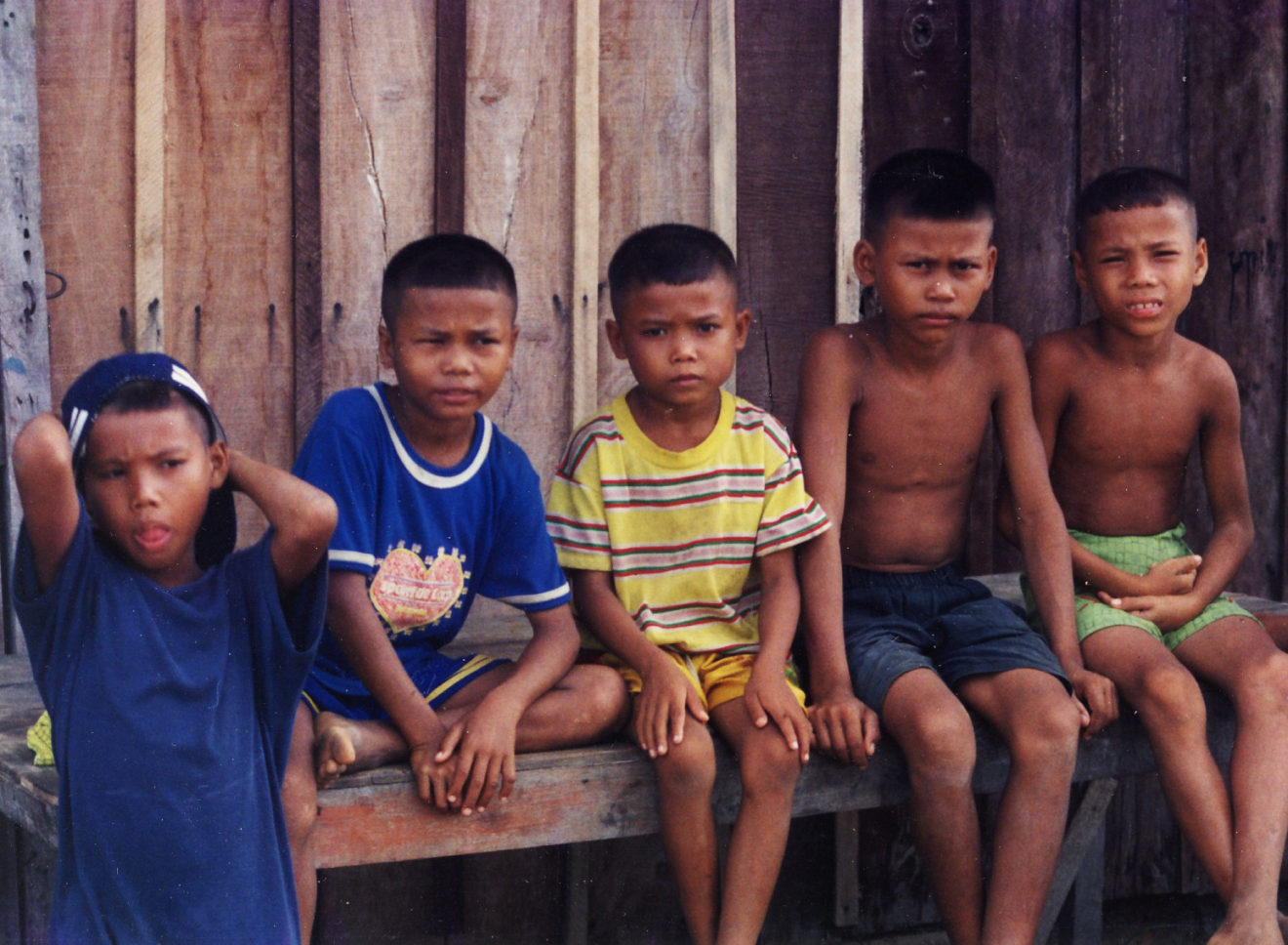
At the Foyer, the children could live a normal children’s life, far from the latest conflicts, prostitution, or forced labor in the rice fields. I was welcomed with beautiful smiles and soon felt fully integrated. Everything in the Foyer had been made to help everyone find his or her place and live with hope and dignity. Every child would participate in the daily life. Some were out in the organic vegetable garden, some were watering plants, and some would help with housework.
Every child was going to school at the village and was getting complementary tutoring classes given by the closest high school and junior high school teachers. Among them was Mr Soeurn, today he is the CSS program’s director. The oldest children were young demobilized soldiers. At the Foyer, they were learning automobile mechanics and carpentry. Among them were Sinara and Taingo, both are now employees at the Foyer Lataste. With other students, they were the ones building the Foyer. Each elder was looking after the youngest children as if they were brothers. A particular attention was drawn to the young Maria Veasna who had multiple disabilities and who had been abandoned at the Foyer because of her handicap. There was a warm homelike atmosphere.
A hundred children had been welcomed between 1993 and 1998. Many of them are still in contact with Emmanuel.

WHERE DOES THE NAME LATASTE COME FROM?
_______________________________________
Jean-Joseph Lataste was born in Cadillac, Gironde on September 5th, 1832 and died on March 10th, 1869. He was a Dominican priest, founder of “Soeurs dominicaines de Béthanie”. He was declared venerable on June 1st, 2007 by the Pope Benoît XVI and was beatified on June 3rd, 2012.
During his first year of ministry, Father Lataste oversaw many church services and sermons for the incarcerated. One of them marked his life forever: the one administering to the Cadillac women prisoners in September 1864. By spending time with these women sentenced to heavy prison sentences, he discovered that in the eyes of men and in their own eyes they were sentenced for life. Back in these days, it was impossible to imagine rehabilitation for these people, as society had no room for them. Some establishments existed for women coming out of jail, but even if they could pray and be welcomed, they didn’t have the possibility to become religious.
Father Lataste wished that there would be a merger between the religious and the reconciled women without considering the women’s past. The founding principle was to have no distinction between the religious and the reconciled women. Without ever denying the reasons that sent these women to prison and the justice’s decisions, Father Lataste had never ceased to believe in them and in their possible rehabilitation provided by the desire to change their lives.
What is the link between Cambodia and the association AEC-Foyer Lataste’s project, which straight from the start, claimed its dimension of being non-denominational and non-political?
Since the momentum given by Father Lataste, the AEC-Foyer Lataste’s action is inspired by, whatever the situation, fundamentals values: the unique and irreplaceable value of each human being, the person’s dignity, regardless of their origins, their situation, their history, their physical, psychological and/or social state, everyone’s fundamental liberty, fraternity and solidarity. Beyond the rehabilitation work and the foundation of the Bethanie’s congregation, Father Lataste invites us to still believe that everything is possible, that a person is bigger than some of the actions in their life. No one is condemned to undergo the weight of their history if hope, charity, and the collective force around a shared educational project is part of their life.
Cambodia has gone through terrible years, where to survive the Khmer Rouge genocide, people had to lie and denounce their neighbor. King Sihanouk had the intuition that his country could only be reborn by going through a national reconciliation. It wasn’t a matter of denying the weight of history, nor the responsibility of those who committed these actions. It was about building and rebuilding lives on a new project full of promise, where everyone would have their place. The first Foyer Lataste was created by this intuition, where everyone could aspire to a better life, regardless of their origin or their personal history, beyond their past life which was mostly chaotic. This is how, since the beginning of the 90’s, the Foyer welcomed very young war orphans, children from poor families, young demobilized soldiers from different military factions across north-west Cambodia, the first Cambodian managers who had everything against them, all welcomed around a common project: to have access to a better life through educational programs and access to their own culture in a family-like framework, where all of them could become the master of their own life.
OUR KEY DATES
_______________________________________
The Foyer Lataste’s history
1993 – The Foyer Lataste’s creation by Emmanuel Guary and the local association ADTJK (association for the technical development of the Khmer youth). The Foyer welcomes disadvantaged children and orphans.
1996 – Meeting with the founders. During a trip to Cambodia, Patricia Labourier met Denis Bouttier. Together they discovered the Foyer Lataste and developed a strong connection with Emmanuel Guary and the ADTJK.
1998 – Creation of help for the Cambodian children – Foyer Lataste. Patricia Labourier and Denis Bouttier create a French association offering a technical and financial support to the Foyer Lataste.
2001 – First graduate. Syronn, one of the first Foyer Lataste’s beneficiary gets his Baccalauréat (High school diploma)! He is the first one to pursue higher education. Now he works as an ADTJK administrator.
2018 – The anniversary. In 2018, 25 years after the Foyer’s creation and 20 years after the AEC’s creation, the association has supported over 3000 disadvantaged children thanks to its actions in numerous fields: child protection, education, culture, environment and health.